
Turning Strategy into Structured Execution.
Operational Architecture
-
Stakeholder feedback revealed a recurring challenge: teams could articulate strategic vision but lacked a unified execution structure. Timelines were fragmented, ownership was unclear, and alignment often occurred reactively rather than proactively.
This phase focused on diagnosing breakdowns in sequencing, communication flow, and governance clarity across cross-functional initiatives.
-
To close these gaps, I developed a structured Planning Package that translated strategic objectives into a cohesive execution framework.
The model defined scope, sequencing, ownership, governance checkpoints, and milestone alignment — creating a centralized system that connected vision to delivery.
This was not a static document, but an intentionally designed execution blueprint.
-
The framework became the anchor for bi-weekly stakeholder planning sessions, guiding milestone discussions, risk mitigation, and alignment decisions.
Each component was built to be leadership-ready — allowing for modular extraction and executive-facing updates when needed. The model created clarity in real time, reinforcing disciplined execution and decision velocity.
-
What began as a solution for one initiative evolved into a standardized delivery model adopted across enterprise programs.
The framework established consistency in how initiatives were structured, communicated, and governed — elevating the stakeholder experience and setting a repeatable enterprise standard for planning and execution.
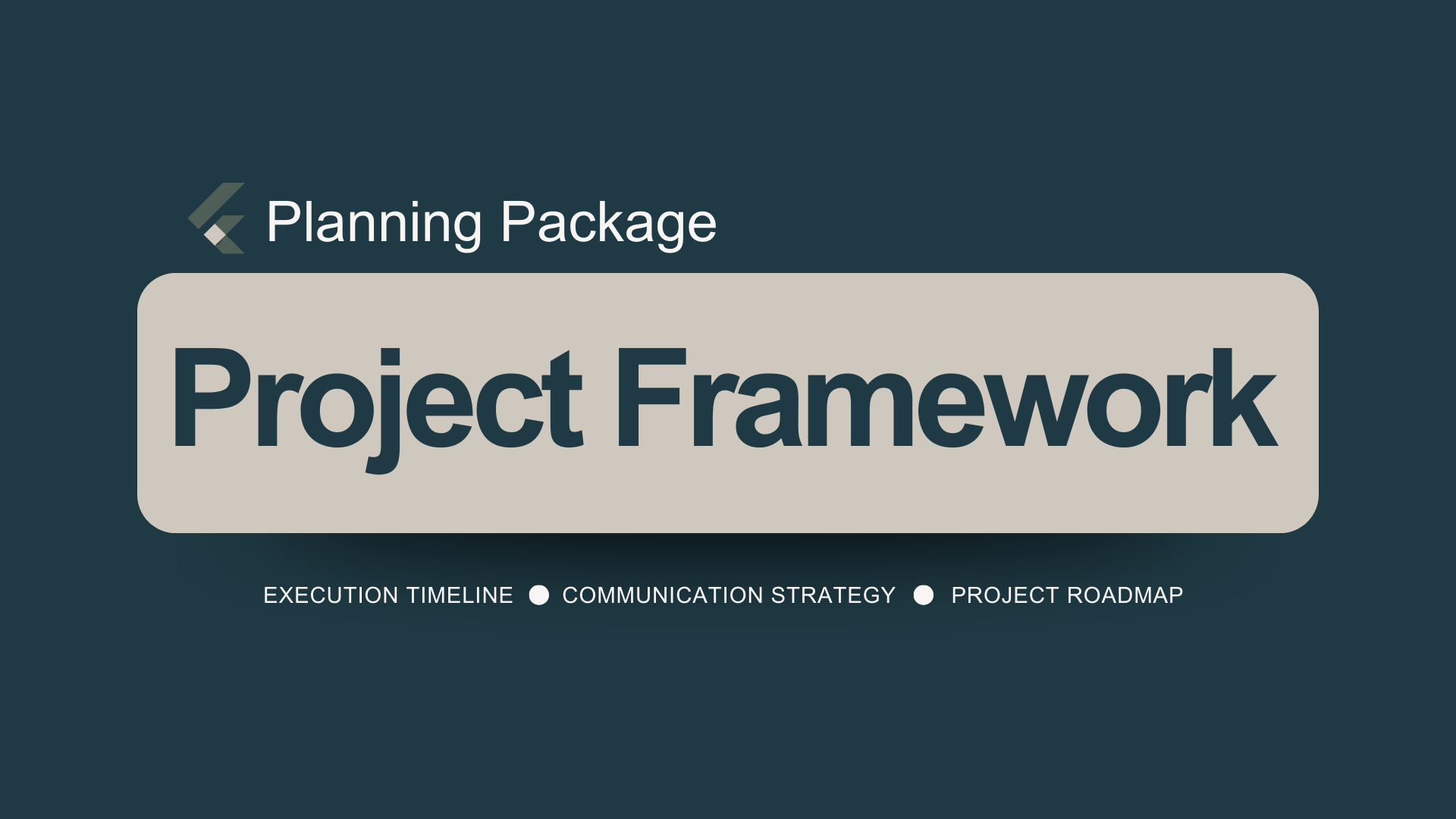
The Planning Package
The Planning Package was designed as a visually intuitive execution framework that translated strategy into a structured, actionable roadmap.
Originally created to improve project clarity, the framework became the anchor for our bi-weekly stakeholder planning sessions with business partners. It provided a consistent guide for reviewing milestones, surfacing risks, aligning on decisions, and mapping next steps in real time.
Over time, it was adopted by our team as a standardized enterprise delivery model — establishing consistency across programs, elevating the partner experience, and setting a clear expectation for how initiatives would be scoped, sequenced, and sustained.
Designed with operational rigor and executive visibility in mind, each component was leadership-ready — allowing us to extract concise, visually compelling updates for leadership and C-suite executives.
The Planning Package became the single source of truth across initiatives, aligning cross-functional teams from discovery through execution and into sustainment.
Impact
Standardized planning across enterprise programs
Anchored bi-weekly stakeholder alignment
Accelerated decision-making
Reduced ambiguity and rework
Enabled executive-ready storytelling and governance
The components below outline the structure of the Planning Package and how it supported alignment at every phase.
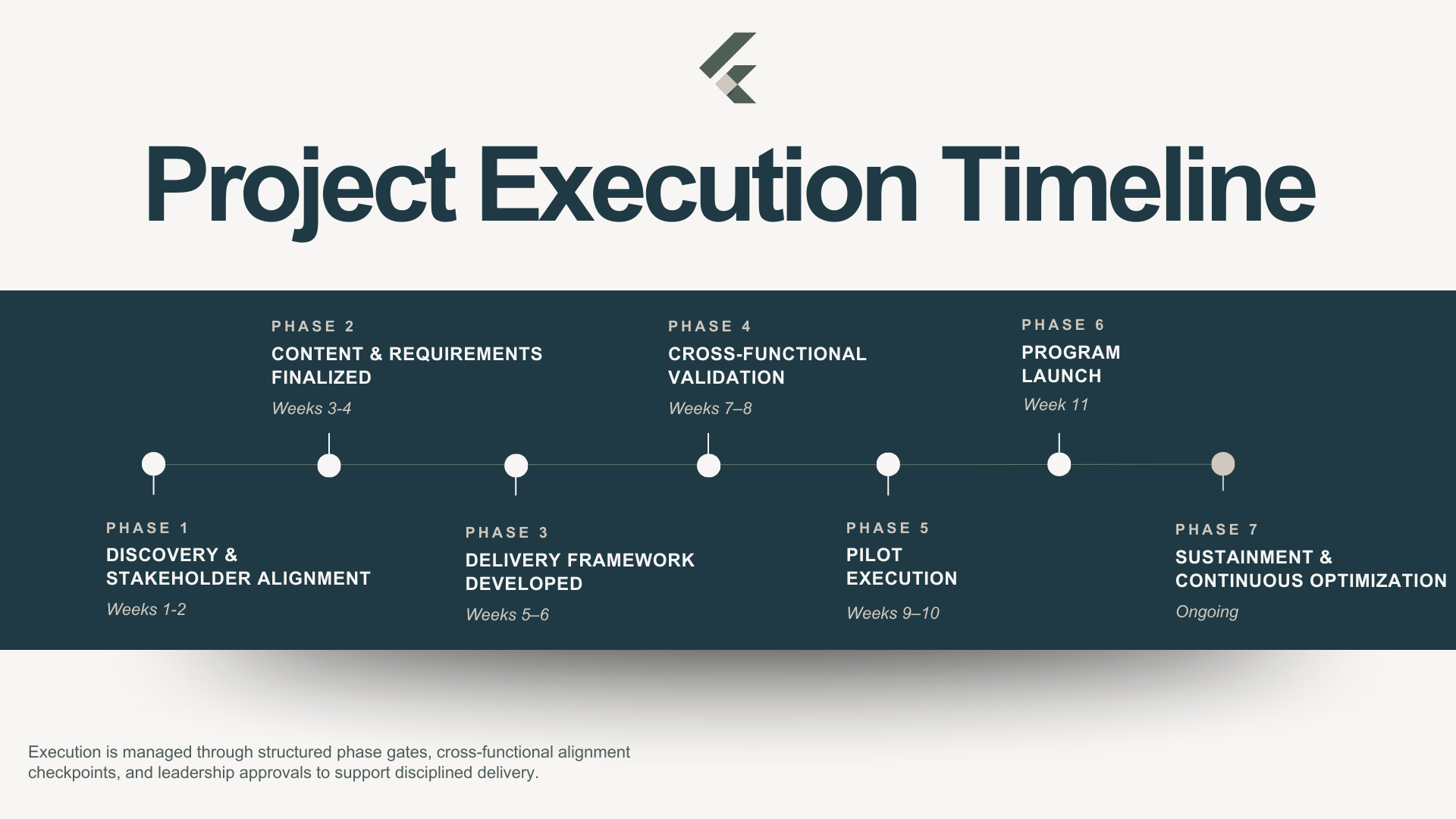
The Project Execution Timeline
As part of the Planning Package, the Project Execution Timeline provides a clear visual roadmap from discovery through launch and sustainment. By defining phases, milestones, and timing, it converts strategic intent into an executable plan that keeps teams aligned and on track.
Why It’s Important
Timelines are most effective when they show more than dates — they communicate sequencing, dependencies, and readiness gates. This timeline sets realistic expectations while reinforcing accountability across phases.
What’s Identified & Articulated
Key phases and milestone timing
Dependencies between phases
Validation and approval checkpoints
Launch and sustainment transition
How It Keeps Teams Aligned & On Time
The visual timeline establishes shared visibility into progress, critical decision points, and key checkpoints, facilitating meaningful discussions that enable stakeholders to anticipate needs, mitigate risk early, and maintain momentum through launch.
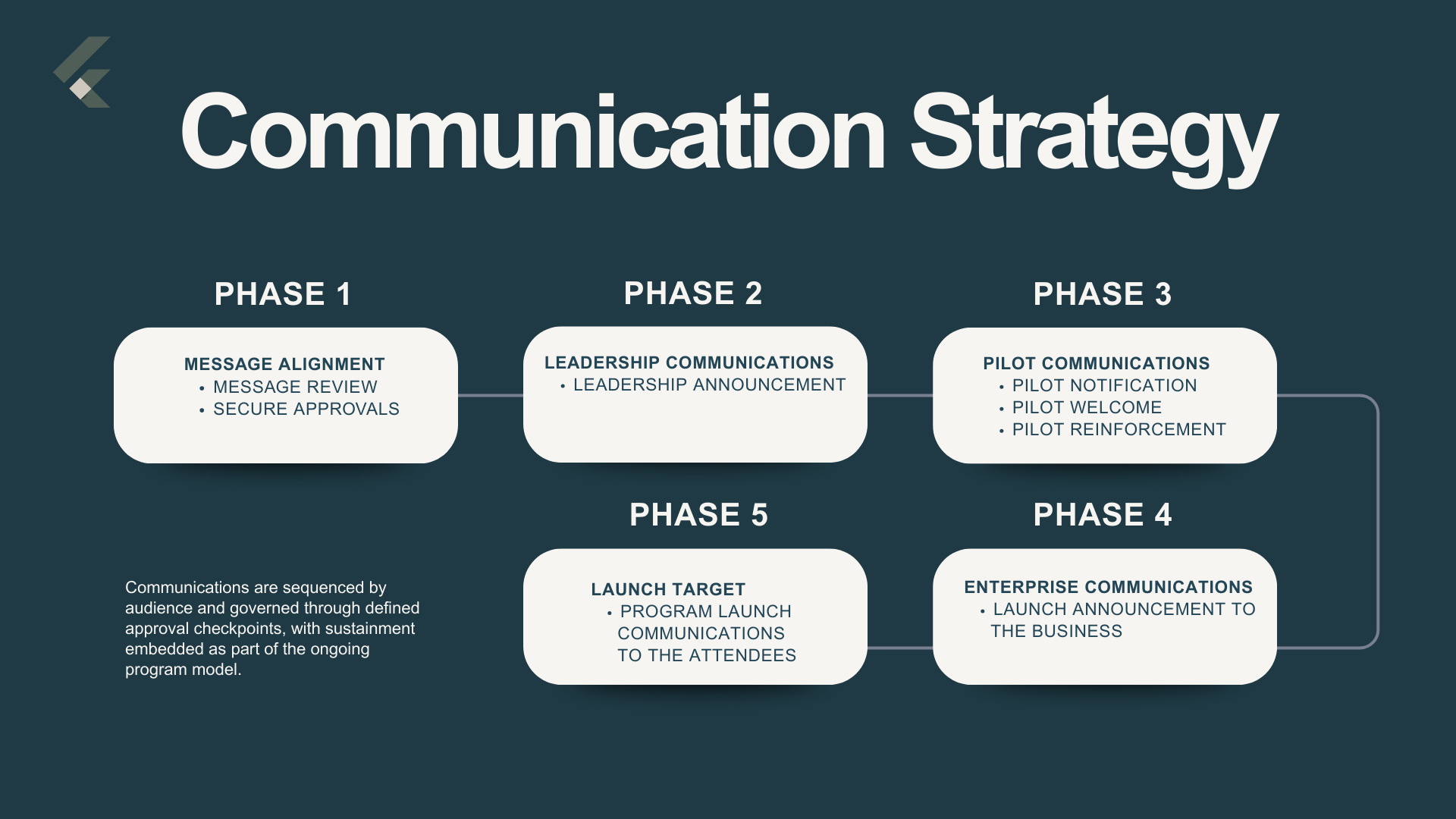
The Communication Strategy
The Communication Strategy ensures that the right messages reach the right audiences at the right time. It aligns communications to execution milestones, supporting awareness, alignment, and readiness throughout the lifecycle of the initiative.
Why It’s Important
Even well-planned initiatives can stall without clear communication. This strategy prevents confusion, reduces resistance, and ensures the appropriate audiences understand what’s happening, when it’s happening, and what’s expected of them.
What’s Identified & Articulated
Audience segmentation (leadership, pilot groups, enterprise)
Message sequencing and cadence
Approval checkpoints for messaging
Reinforcement moments tied to delivery phases
How It Keeps Teams Aligned & On Time
By coordinating communications with execution, teams avoid misalignment, last-minute escalations, and messaging gaps — supporting smoother rollout, stronger adoption, and a seamless customer experience.
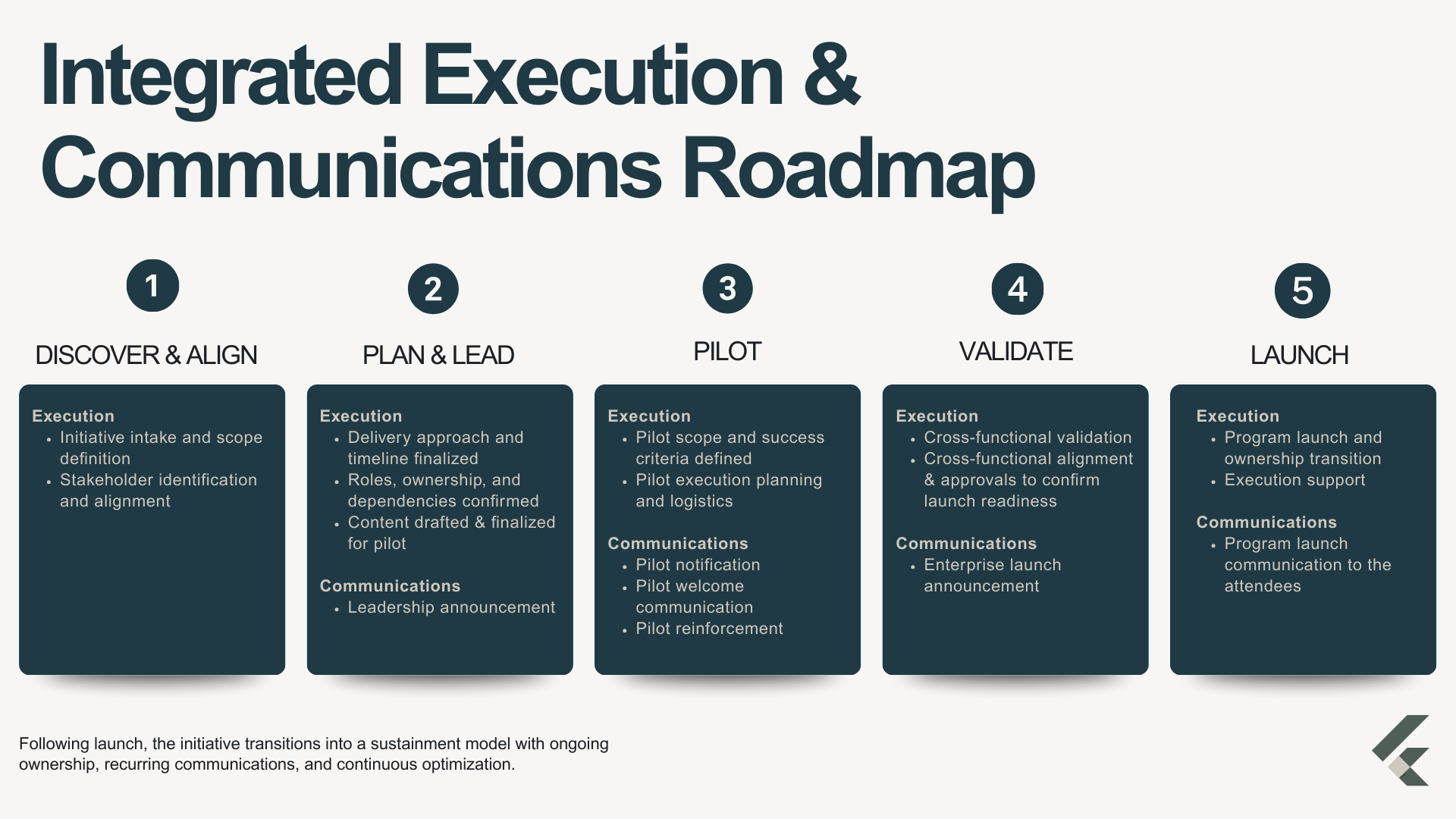
Integrated Execution & Communications Roadmap
The Integrated Roadmap brings execution and communications together into a single, cohesive view. It demonstrates how delivery milestones and messaging work in tandem to guide an initiative from alignment through launch.
Why It’s Important
Execution and communication often fail when treated as separate tracks. This roadmap reinforces that alignment, readiness, and adoption are achieved when both move together.
What’s Identified & Articulated
Clear phase progression from alignment to launch
Parallel execution and communication activities
Leadership engagement points
Enterprise-wide launch readiness
How It Keeps Teams Aligned & On Time
By visualizing both tracks together, the roadmap ensures stakeholders understand how decisions, actions, and messaging connect — reducing friction and enabling coordinated execution.